Telnet & serial
Telnet and serial hosts appear in the same list as SSH hosts, with the same folders, colours, search and workspaces. Typical targets are console servers, lab switches and directly attached boards.
OpenSSH has no representation for these, so they are stored as Muxus's own saved hosts in
the local database rather than in ssh_config.
Telnet
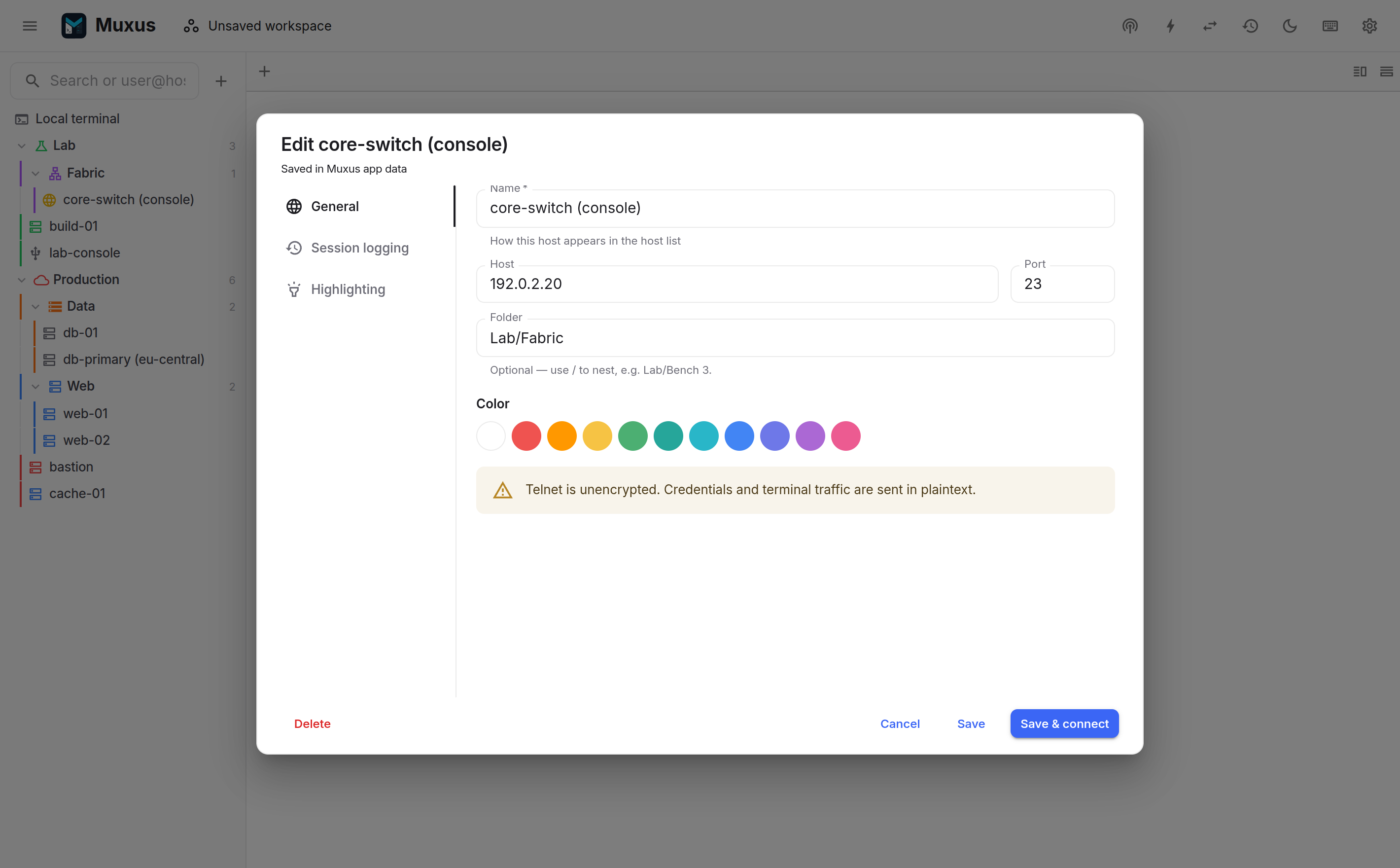
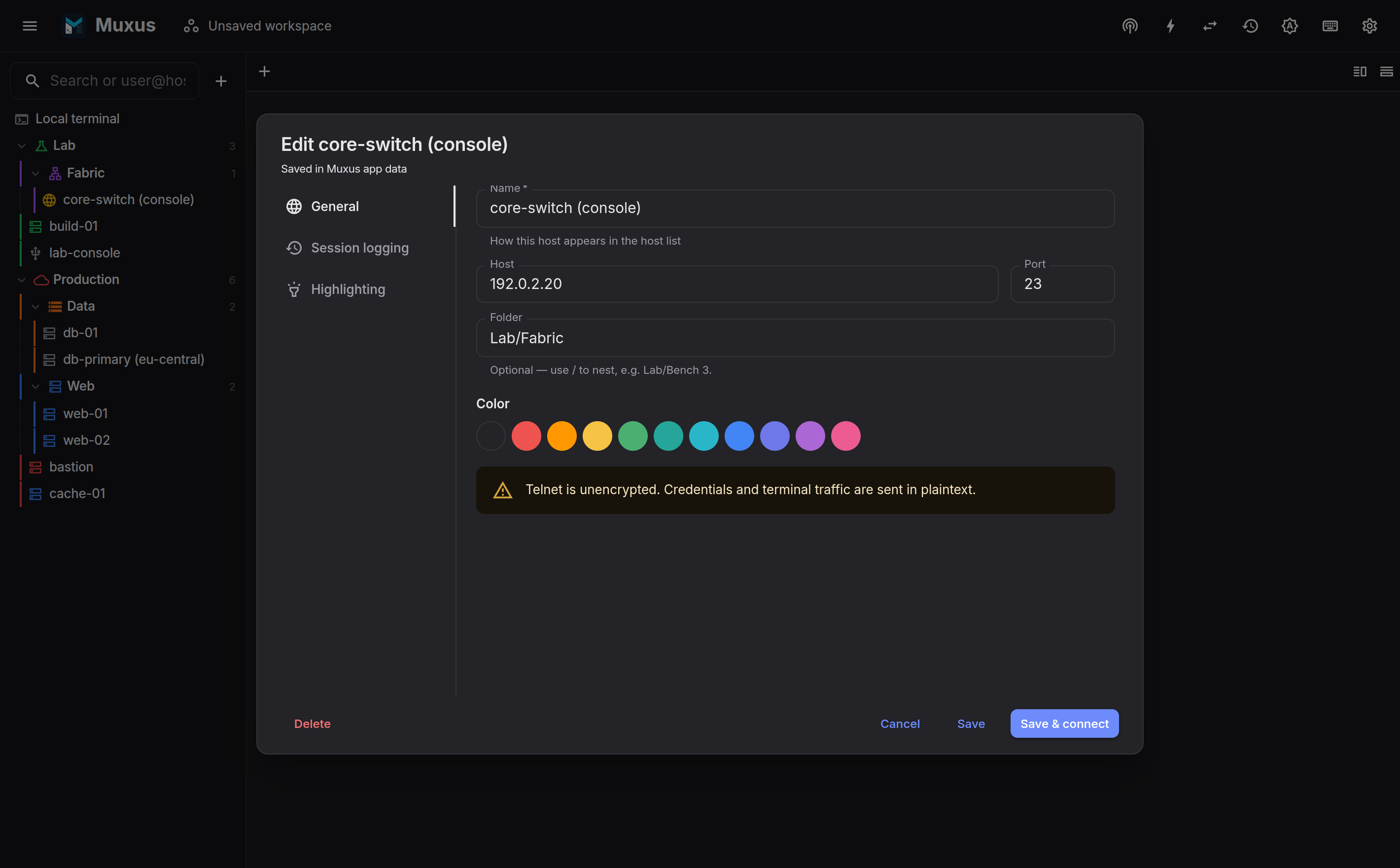
Sessions negotiate terminal type and window size, so full-screen tools on the far end receive the pane dimensions and resize with it.
Telnet has no encryption and no server authentication
All traffic, including what is typed at a login prompt, crosses the network in the clear, and nothing proves the identity of the far end. Use it only on a trusted network: a console VLAN, a lab, or a direct cable.
Serial
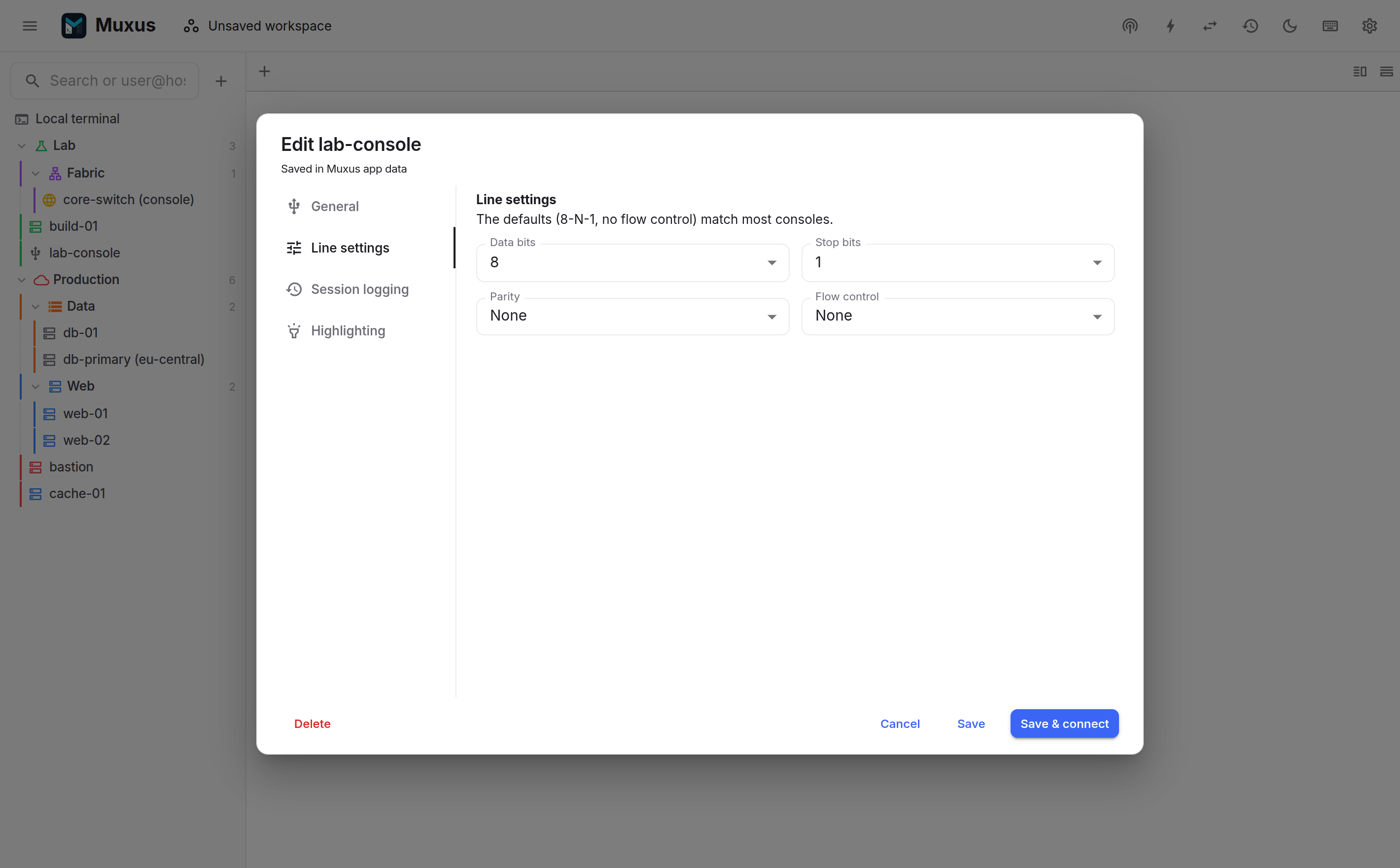
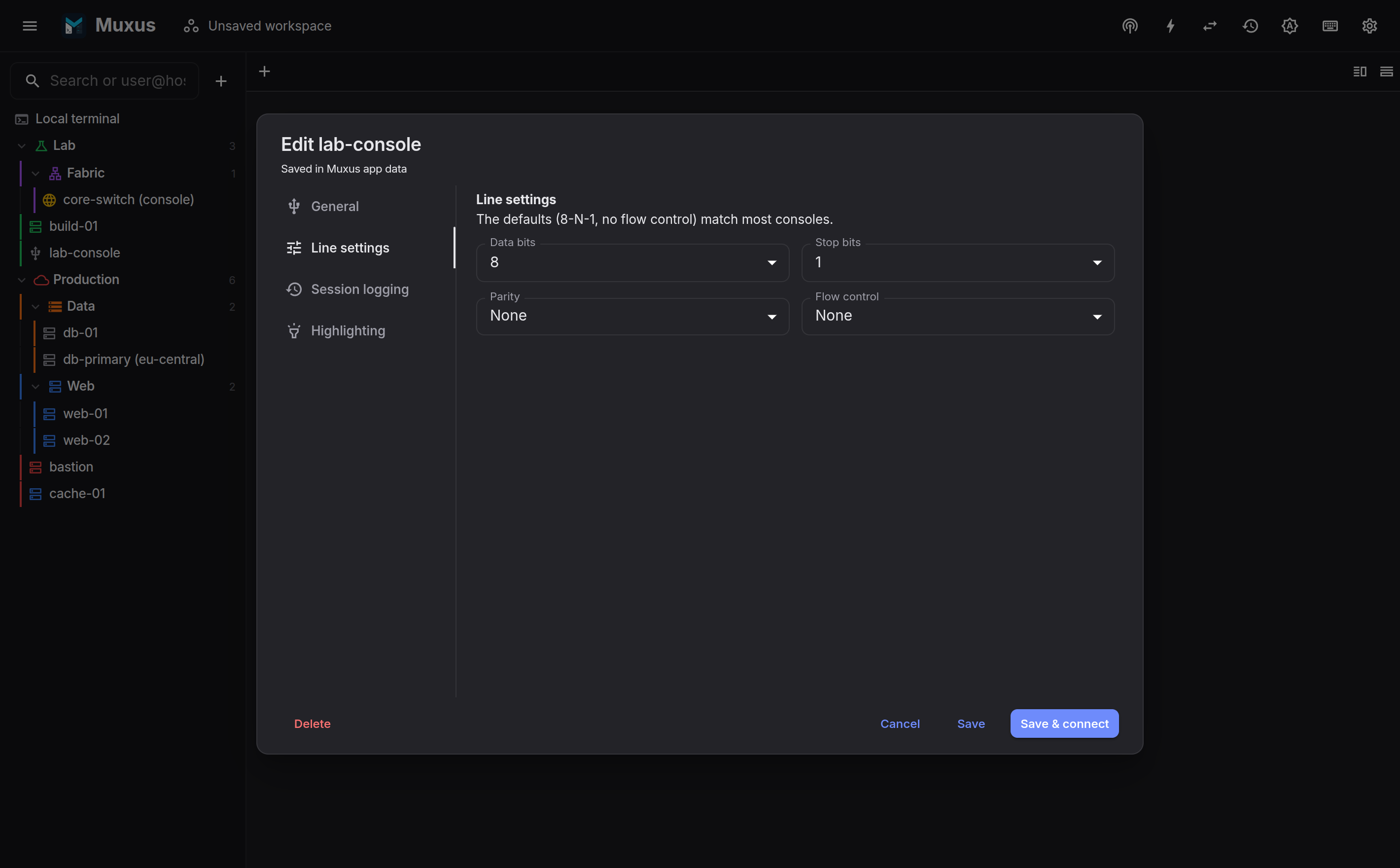
Muxus discovers serial ports through the local backend on Linux, Windows and macOS, and accepts a typed path when the device is not listed. Line settings are per profile:
| Setting | Values |
|---|---|
| Baud rate | 300 … 921 600, or a custom value |
| Data bits | 5, 6, 7, 8 |
| Stop bits | 1, 2 |
| Parity | none, even, odd, mark, space |
| Flow control | RTS/CTS, XON/XOFF, or none |
Platform naming:
/dev/ttyUSB0, /dev/ttyACM0. Access usually requires membership in the
distribution's serial group, dialout or uucp. Log out and back in after adding the
membership.
/dev/tty.usbserial-*, /dev/tty.usbmodem*.
COM3, COM7, …
One reader per port
A serial port cannot be shared, so splitting a pane from a serial session always asks what to start rather than opening a second reader on the same device.
Shared behaviour
Telnet and serial tabs behave as ordinary tabs. They live in panes, take colour flags, join multi-exec groups, are saved in workspaces, and are recorded by session history when it is enabled. Features that require SSH do not apply: no file browser, no remote editor, no port forwarding.